Begin with the square, then change scale
Kraków’s Main Market Square is an unusually generous starting point: the Cloth Hall, St. Mary’s Basilica and the streets radiating from the square make the medieval centre legible before you have learned the map. Arrive early if you want to notice the proportions and the sound of the city before outdoor tables fill the edges. Rather than treating the square as a checklist, use it to orient yourself: Grodzka Street points south toward Wawel, while Floriańska leads north through the old defensive line toward the Barbican.
Follow the royal route downhill
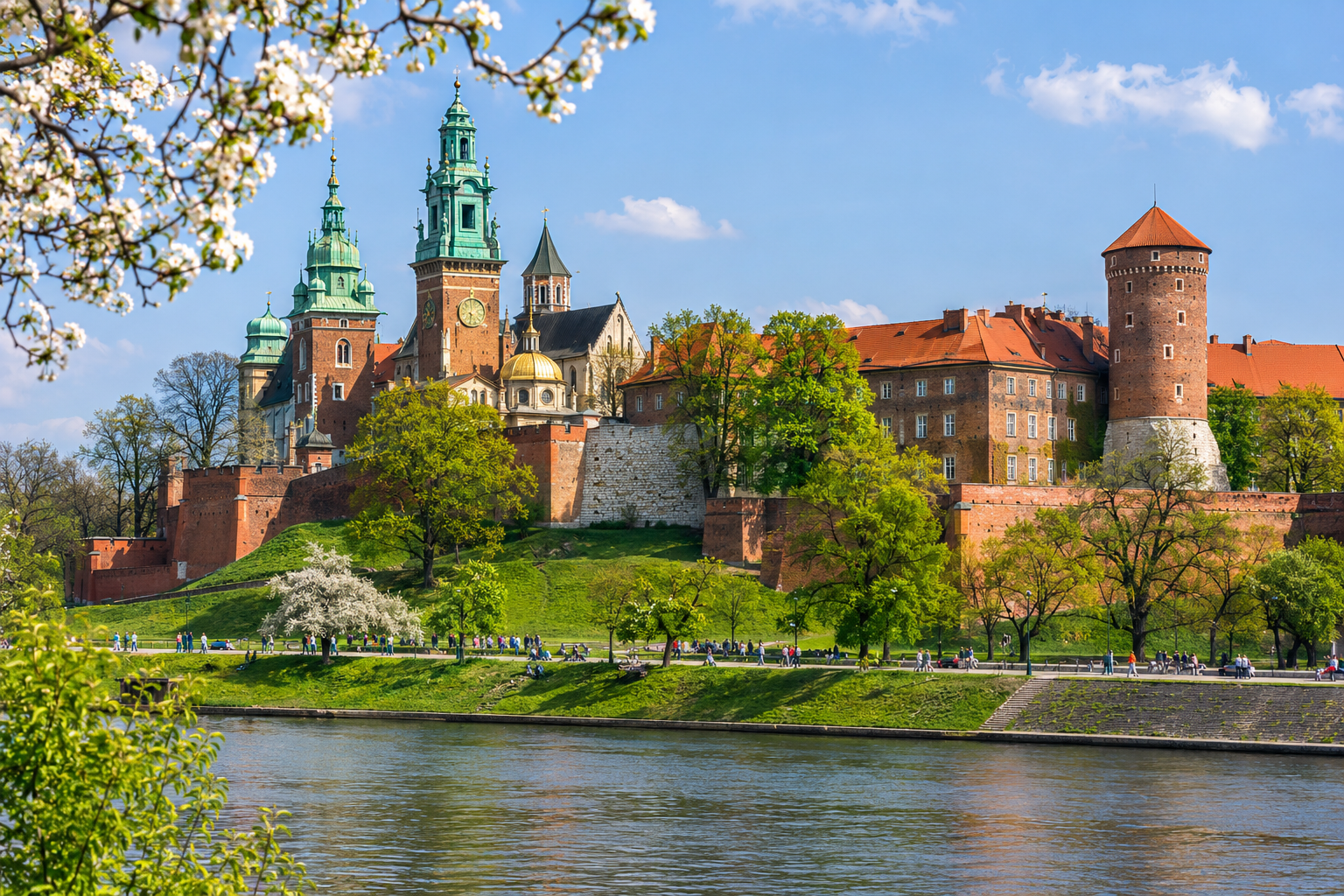
Walk south along Grodzka through a sequence of churches and small squares. The route is compact, but its layered façades reward a slower pace. Wawel Hill sits above the Vistula and was the seat of Polish kings for centuries; the castle complex and cathedral tell different parts of that story. Give the hill its own block of time. Courtyards, viewpoints and interiors each move at a different rhythm, and a rushed circuit turns a place of real political and artistic weight into a backdrop.
Cross the river to understand the setting
From the hill, descend toward the river path. The Vistula makes Kraków feel less enclosed than the street plan suggests. A walk along the bank gives a clear view back to Wawel and connects naturally to Kazimierz, the historic Jewish quarter. The change is not simply architectural: Kazimierz’s synagogues, former market streets and contemporary cafés occupy a district shaped by Jewish life, displacement and postwar renewal. Read the district with care, leaving space for the places of remembrance as well as its present-day culture.
Choose one neighborhood for the afternoon
Kazimierz can fill an afternoon without a rigid list. Szeroka Street and the nearby synagogues offer a concentrated introduction; quieter side streets reveal courtyards and layers of ordinary urban fabric. Podgórze across the river adds a different perspective, including the former ghetto area and sites of wartime memory. These are not interchangeable attractions. Decide whether your day is primarily about royal Kraków, Jewish heritage, or a wider history of the twentieth century, and leave enough quiet time for the subject you choose.
Make the route work for your stay
For a first visit, the Main Square, Grodzka and Wawel form a satisfying half-day. Add Kazimierz when you have a full day, and consider Podgórze as a separate extension. Kraków is well suited to walking, though cobbles and uneven paving can make a step-free route difficult; trams are useful when your feet need a break. Rail connections make it an easy anchor for a longer Polish itinerary. Pairing it with Warsaw emphasizes national history and contemporary life; pairing it with the southern mountains shifts the trip toward landscape.