Let the bridges tell you where you are
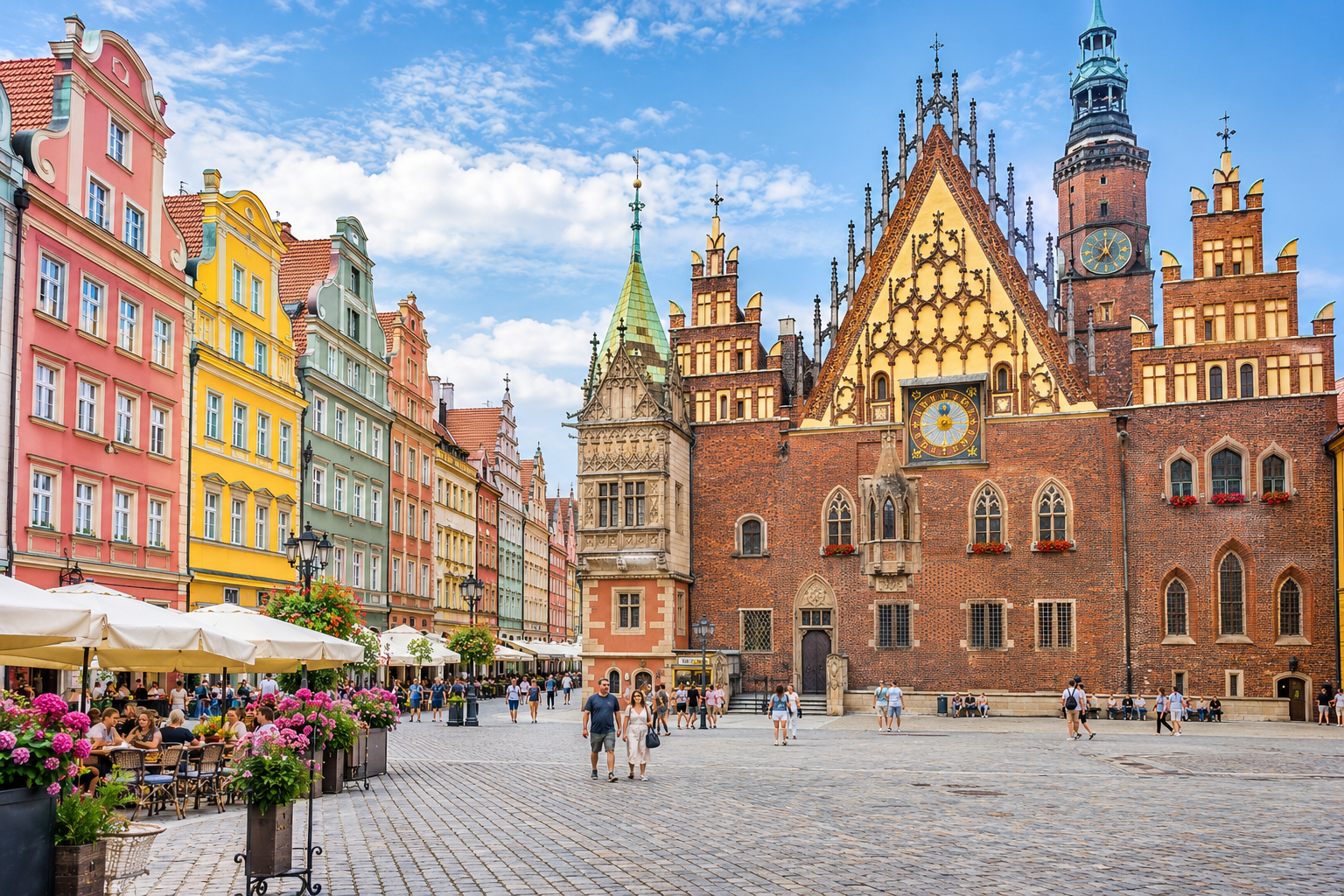
Wrocław is threaded through by the Oder and its branches, with islands and bridges shaping how the city is experienced. Begin at the Market Square, where the Gothic Old Town Hall anchors a lively civic space. From there, move east toward the university and the river, then continue to Ostrów Tumski. The walk is less about covering a large distance than about noticing how water repeatedly changes the scale and direction of the city.
Cross from the Market Square to the cathedral island
The route to Ostrów Tumski passes the university area and several bridges. The island’s cathedral and ecclesiastical buildings mark one of the oldest parts of the city. Visit in daylight for architectural detail, then return near dusk if you want to see the district change in atmosphere. The contrast between the busy centre and the quieter island gives Wrocław a distinctive pacing. Allow time to pause at the river rather than treating every bridge as a transition to the next attraction.
Use the city’s layers as a reading guide
Wrocław has belonged to different political and cultural worlds over its long history. Its architecture reflects those changes without reducing them to a single national story. The Market Square’s reconstructed façades, the university’s baroque interiors and the island’s religious buildings offer different evidence. Museums and memorials can deepen the picture, but even a walk through the centre reveals how urban identity is formed by continuity, rupture and rebuilding.
Choose a green counterpoint
The Centennial Hall and surrounding parkland lie farther east and make a natural half-day extension. The hall, a major work of early twentieth-century reinforced-concrete architecture, contrasts with the medieval centre. Nearby green space and the broader riverside setting make the excursion worthwhile even for travelers less interested in architectural history. Use public transport for the outward journey if you want to save walking energy for the grounds.
Build a stay that leaves room to wander
One day can hold the Market Square, university quarter and Ostrów Tumski at an unhurried pace. Add the Centennial Hall area or a museum on a second day. Wrocław is a useful stop between western and southern Poland, but it also rewards a dedicated stay because its islands make spontaneous detours easy. If traveling with limited mobility, plan bridge and cobblestone sections individually; route conditions vary, and a tram can connect districts when a full walking loop is impractical.