Start with the brick silhouette
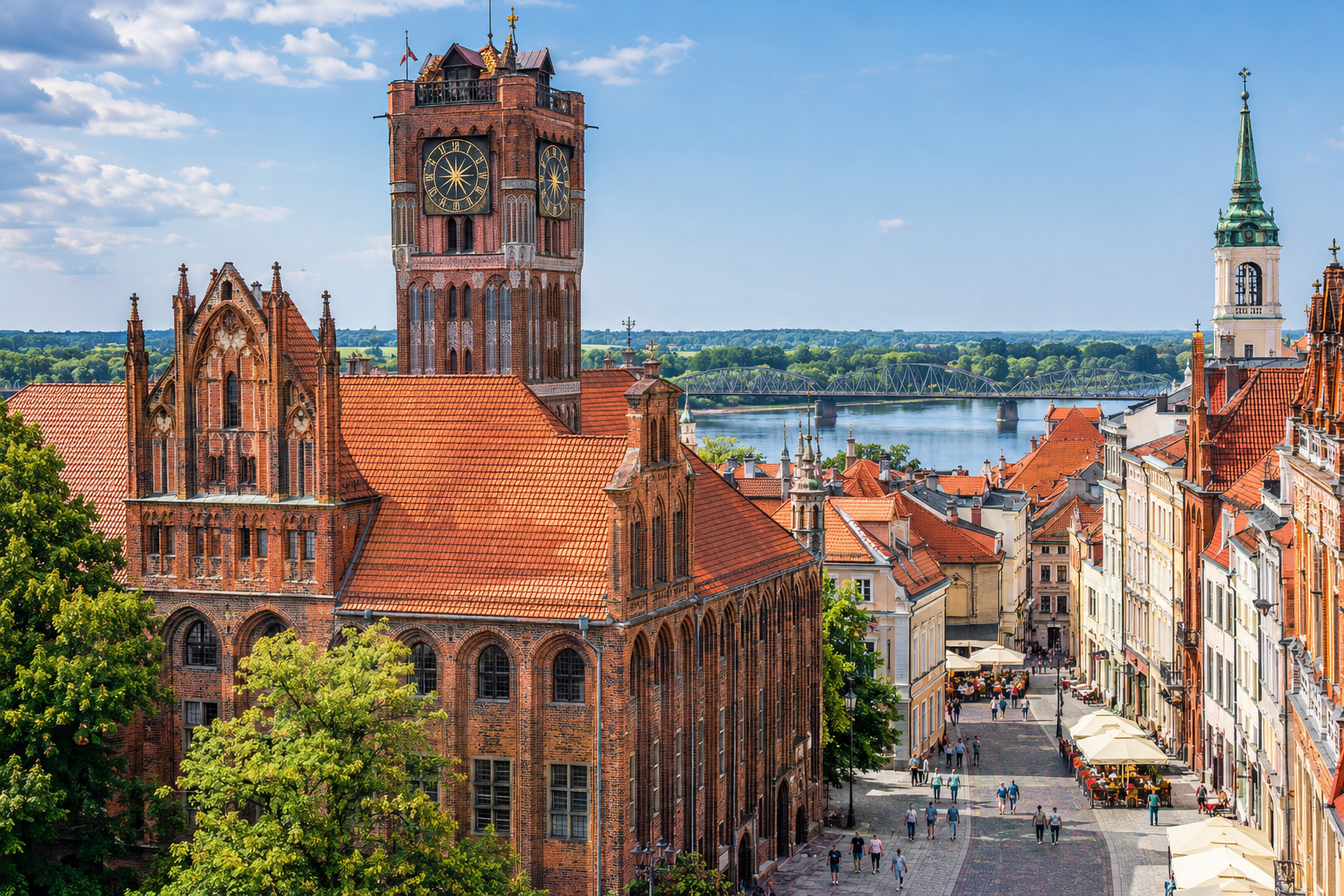
Toruń’s Old Town is one of Poland’s most coherent brick Gothic ensembles. The Town Hall, monumental churches and merchant houses give the centre a strong visual identity, while the Vistula setting explains its place in a medieval trading network. Begin at the Market Square, then walk toward the river-facing edge of the old city. The shift from civic square to embankment helps connect architecture to geography.
Trace the medieval town without rushing
The Old Town and New Town grew as neighboring urban areas, and their streets still invite a route that moves between different scales. Defensive walls, gates and church interiors are not simply isolated monuments; together they show how a fortified commercial city organized religious, civic and domestic life. Look for changes in brickwork and street width as you walk. A compact centre makes it tempting to hurry, but a slower route reveals details that a quick circuit misses.
Put Copernicus in context
Toruń is closely associated with Nicolaus Copernicus, who was born here in 1473. The city’s museums and memorials can introduce his biography, but the broader value lies in placing one individual within a merchant town connected to wider intellectual and commercial networks. The Copernicus House and local collections are meaningful stops for visitors interested in history of science; those with a shorter stay can focus on the city’s architecture and river setting instead.
Follow the river edge
The Vistula embankment offers a broad view of the old town’s brick mass and is especially useful for understanding its urban outline. On the opposite bank, viewpoints look back toward the skyline and make a memorable end to the day. Crossing the river adds time, so consider it as a deliberate extension rather than an automatic detour. The river can also frame a quieter walk after the narrow streets and indoor visits of the centre.
Make Toruń a focused stop
Toruń fits well as a one-night stop between larger cities, but it can sustain a fuller visit for travelers who enjoy medieval architecture and the history of science. Arrive with enough daylight for the Old Town walk, then reserve museums or church interiors for the next day. Rail connections make the city accessible from other Polish hubs, though exact services vary by date. If your trip is short, prioritize the Market Square, one major interior and the river view rather than trying to see every museum.